 Almalyk Mining and Metallurgical Complex Joint Stock Company
-
Call-center
+998 78 141 90 09 -
Helpline
+998 71 619 23 33
 Ру
Ру O'z
O'z En
En-
Call-center
+998 78 141 90 09 -
Helpline
+998 71 619 23 33
Compliance at AMMC: reforms, challenges and system
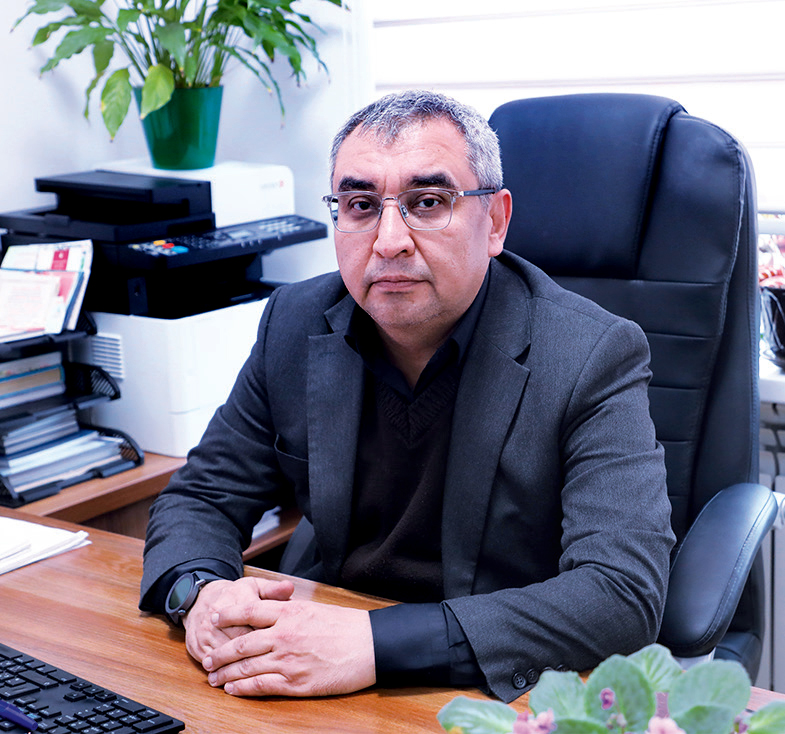
One of the independent structures responsible for preventing corruption risks, strengthening internal control mechanisms, and ensuring transparency and legality is the compliance service.
Its main task is to identify dangerous points that create conditions for corruption in the activities of the enterprise, develop proposals for their elimination, prevent conflicts of interest, implement ethical standards for employees, and effectively work with appeals. The Compliance service is not a punitive body, but rather a preventive and risk management mechanism. It aims to form and strengthen integrity standards in the enterprise through systematic analysis, monitoring, and educational and promotional work. In this sense, the activities of the compliance service in the system of the Almalyk Mining and Metallurgical Complex, which has a large workforce, are also noteworthy. We were interested in what work is currently being carried out by the service and its activities in general. Our interviewee will be Shukhrat Juraev, Head of Compliance Control Service of the Almalyk Mining and Metallurgical Complex.
- Shukhrat Kholboevich, tell me, how long did it take to fully implement the compliance system at the Almalyk Mining and Metallurgical Complex? Where was the greatest resistance observed?
- The Compliance Control Service was established at JSC "Almalyk MMC" in May 2021, and to date, the implementation of the system is being carried out in stages.
Naturally, as with any reform, there were certain difficulties in adapting to new rules and processes. The greatest resistance was mainly related to psychological adaptation, i.e., the difficulties employees faced in accepting new procedures. However, thanks to comprehensive promotion, training seminars, and the firm position of the plant's management, these problems were gradually eliminated, I can say.
- Which processes fall into the "red zone" when assessing corruption risks? What is the reason?
- Areas with a high risk of corruption include procurement processes, personnel policy - hiring, appointment and rotation, construction-contracting and investment areas, warehouse activities, as well as material incentives, calculation of salaries and bonuses. The reasons for the high risk of these processes are clear. These are high material interests, a high probability of subjective decision-making, insufficient formation of control mechanisms, as well as incomplete digitalization and transparency. Regular staff surveys and law enforcement statistics greatly assist us in identifying critical points.
- To what extent does the compliance service influence important decisions of the Almalyk mining and metallurgical complex? Have there been cases where projects were suspended?
- According to the Model Regulation, the Compliance Service is not a punitive body, but a preventive mechanism. We provide conclusions and suggestions to management, but the right to make decisions remains directly with the plant management.
In practice, there have been cases when additional expert examinations and inspections were required for investment projects or contracts assessed as high-risk. As a result, the implementation timeframe for some projects has been delayed, or their cost has been significantly reduced in favor of the plant. This is a vivid example of the compliance system working.
- Is the increase in the number of anonymous appeals a positive phenomenon or a sign of a problem?
- If the number of appeals is increasing, this primarily indicates an increase in employees' trust in the Compliance Service. Employees reporting without fear is a very positive indicator. However, if recurring problems in appeals increase, this indicates the need for measures such as strengthening control in certain processes, expanding digitalization, installing video surveillance, introducing rotation, and reviewing local documents. In conclusion, an increase in the number of appeals is simultaneously a sign of success and a signal requiring attention and analysis.
- How is compliance effectiveness measured? Is the decrease in violations of the law a real indicator, what is your opinion on this?
Effectiveness cannot be assessed solely by the indicator "the number of violations is decreasing." According to the President's decision, compliance services across the republic are evaluated based on 29 indicators through a special digital Platform. Inspections are carried out by the Anti-Corruption Agency and independent experts. Moreover, the decrease in the number of violations can sometimes be related to employees' fear of reporting or the ineffective operation of communication channels. Therefore, hidden issues are regularly identified through internal monitoring and "risk maps."
For information, by the end of 2024, the Almalyk Mining and Metallurgical Complex scored 85 points, achieving an increase of 21 points compared to 2023.
- To what extent are compliance processes digitalized at the Almalyk Mining and Metallurgical Complex? Please elaborate on this as well.
- Digitalization processes in the system are being implemented in stages. Some processes are fully automated, while others are at the project or test stage.
In collaboration with our Compliance service and IT department, a Telegram platform called "MTbot" for Conflict of Interest declarations and MT registry has been launched in test mode for all employees. In addition, digital modules for document management and handling appeals are operating in practice.
- Shuhrat Kholboevich, thank you very much for the information. We believe that under your leadership, the service will play a crucial strategic role in deeply instilling principles of transparency, compliance with the law, and honest work at the plant, as well as in timely identifying and preventing existing risks.
- Thank you, stay well.
Interview by Dilafruz EGAMBERDIEVA
