 Almalyk Mining and Metallurgical Complex Joint Stock Company
-
Call-center
+998 78 141 90 09 -
Helpline
+998 71 619 23 33
 Ру
Ру O'z
O'z En
En-
Call-center
+998 78 141 90 09 -
Helpline
+998 71 619 23 33
Innovation Project at the Railway Shop 2
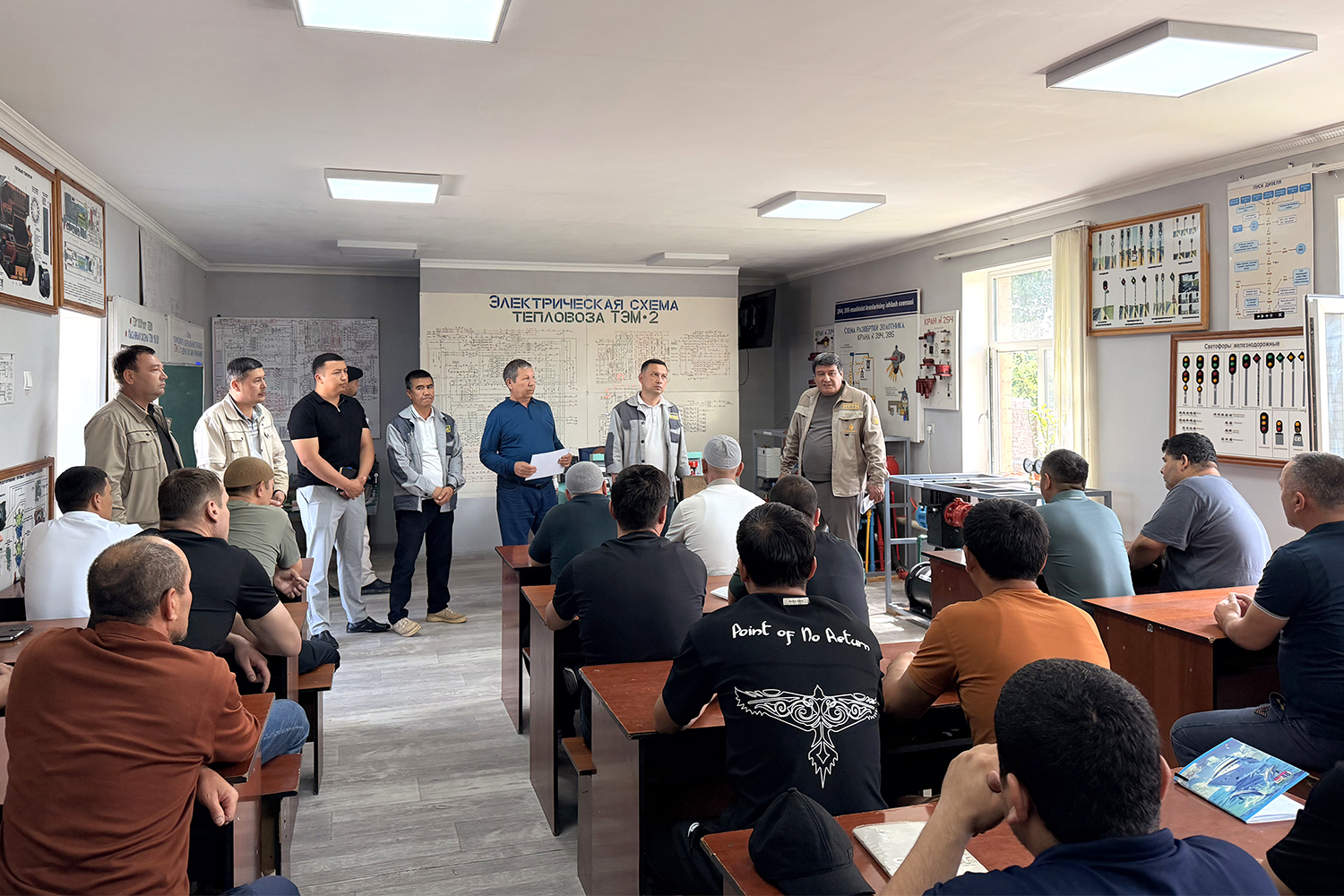
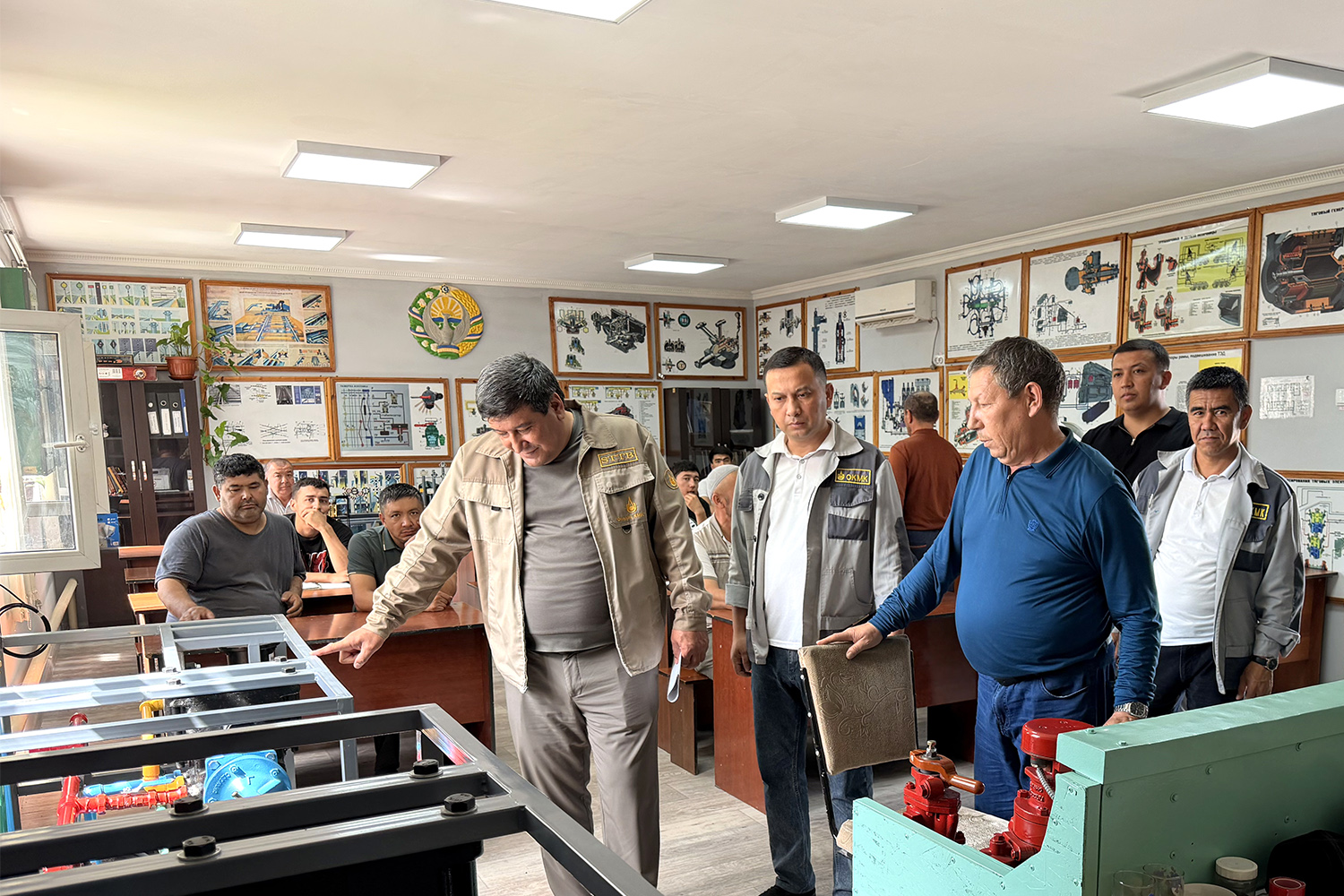
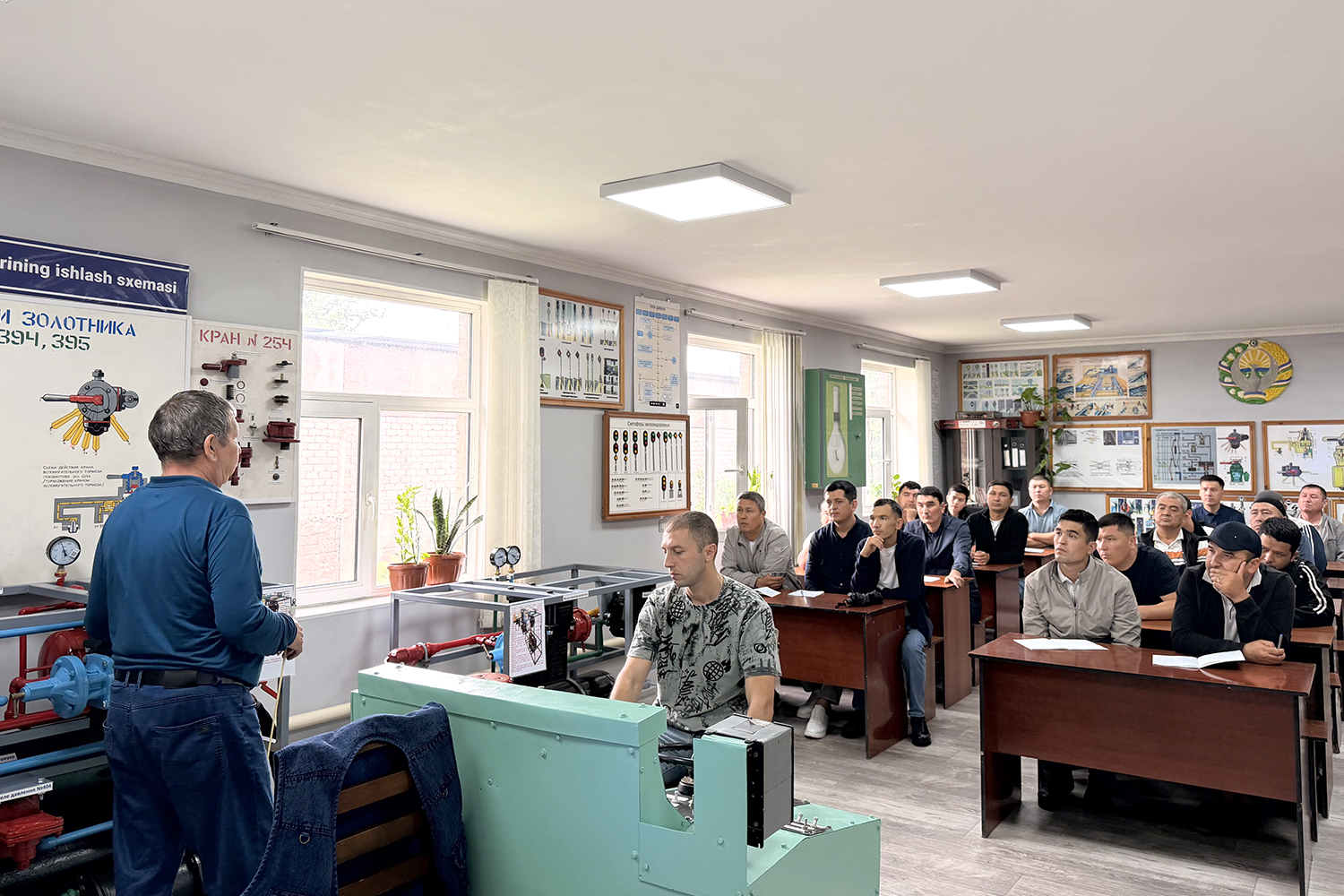
Modernization of the railway transport system and improvement of service quality are directly linked to the training of highly qualified specialists and the continuous professional development of employees.
For this purpose, a modern, innovative technology – training simulator – has been introduced at Railway Shop No. 2 of the Industrial Rail Transport Department as part of a program to train personnel for freight and passenger transportation and improve employee skills.
This simulator was developed at the initiative of locomotive driver Erkin Kazanov. The system consists of two modules: specialized software and a workstation with frame structure.
The specialized software allows for the complete virtual simulation of train movements, shunting operations, freight and passenger transportation processes, as well as possible emergency situations on the railway.
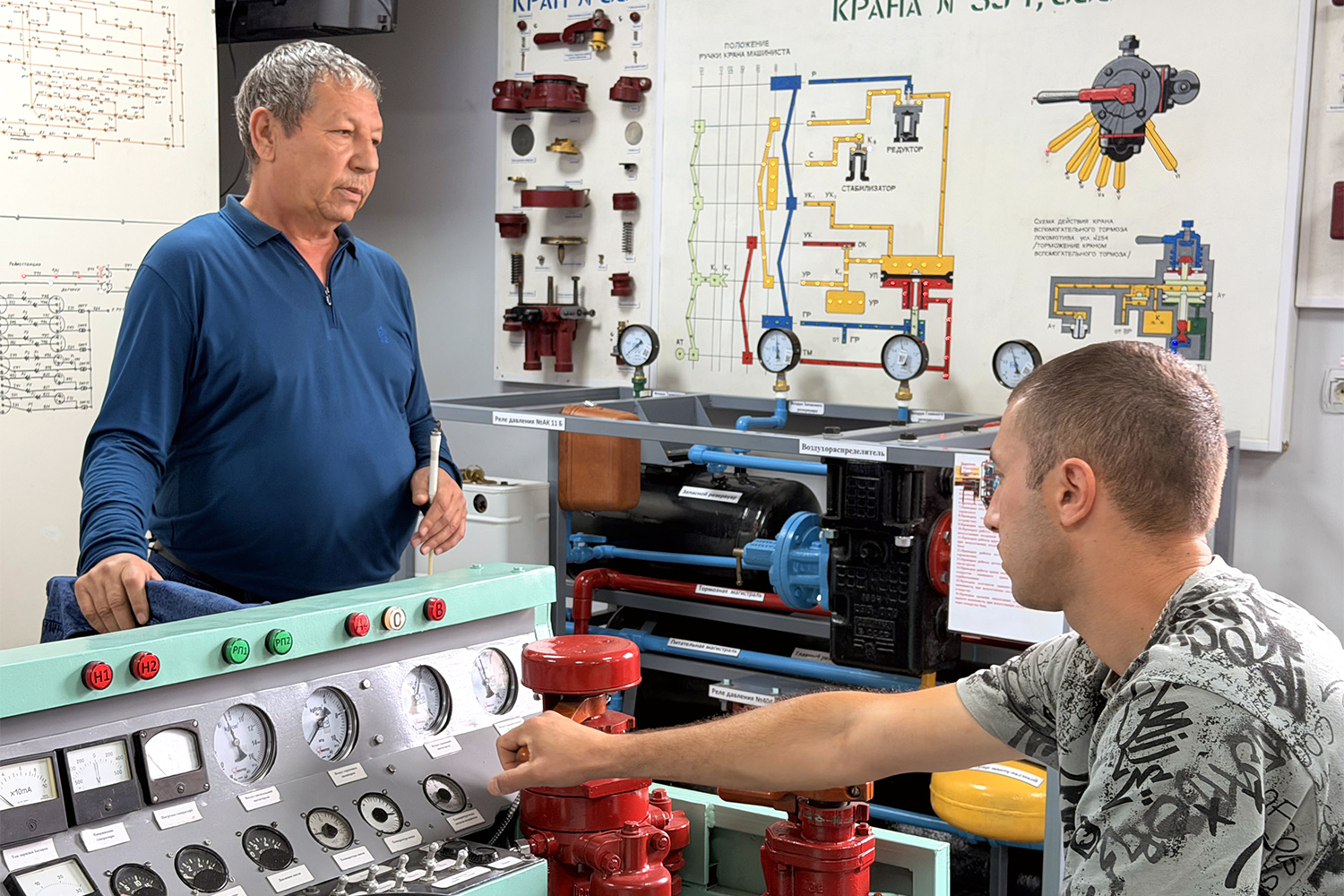
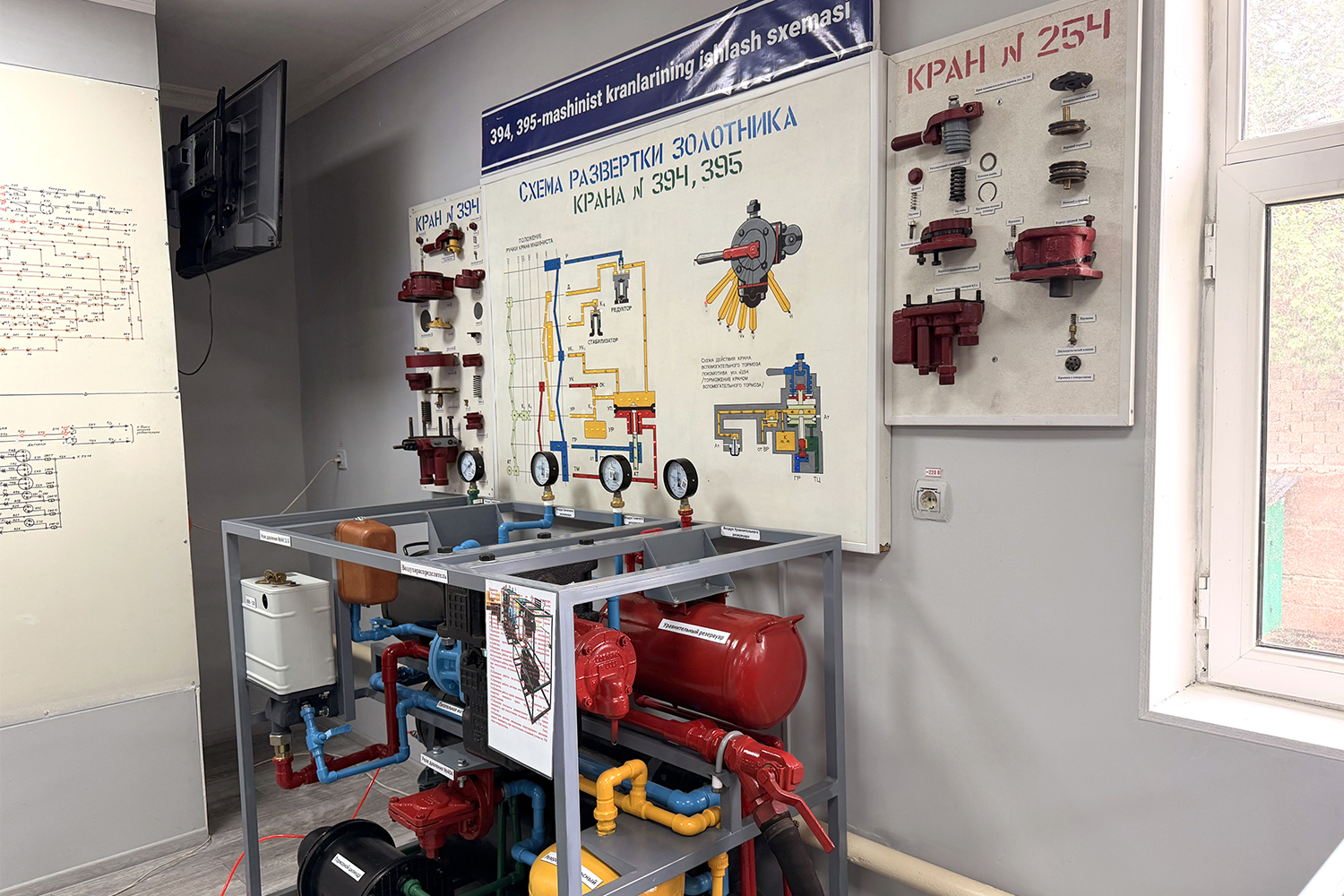
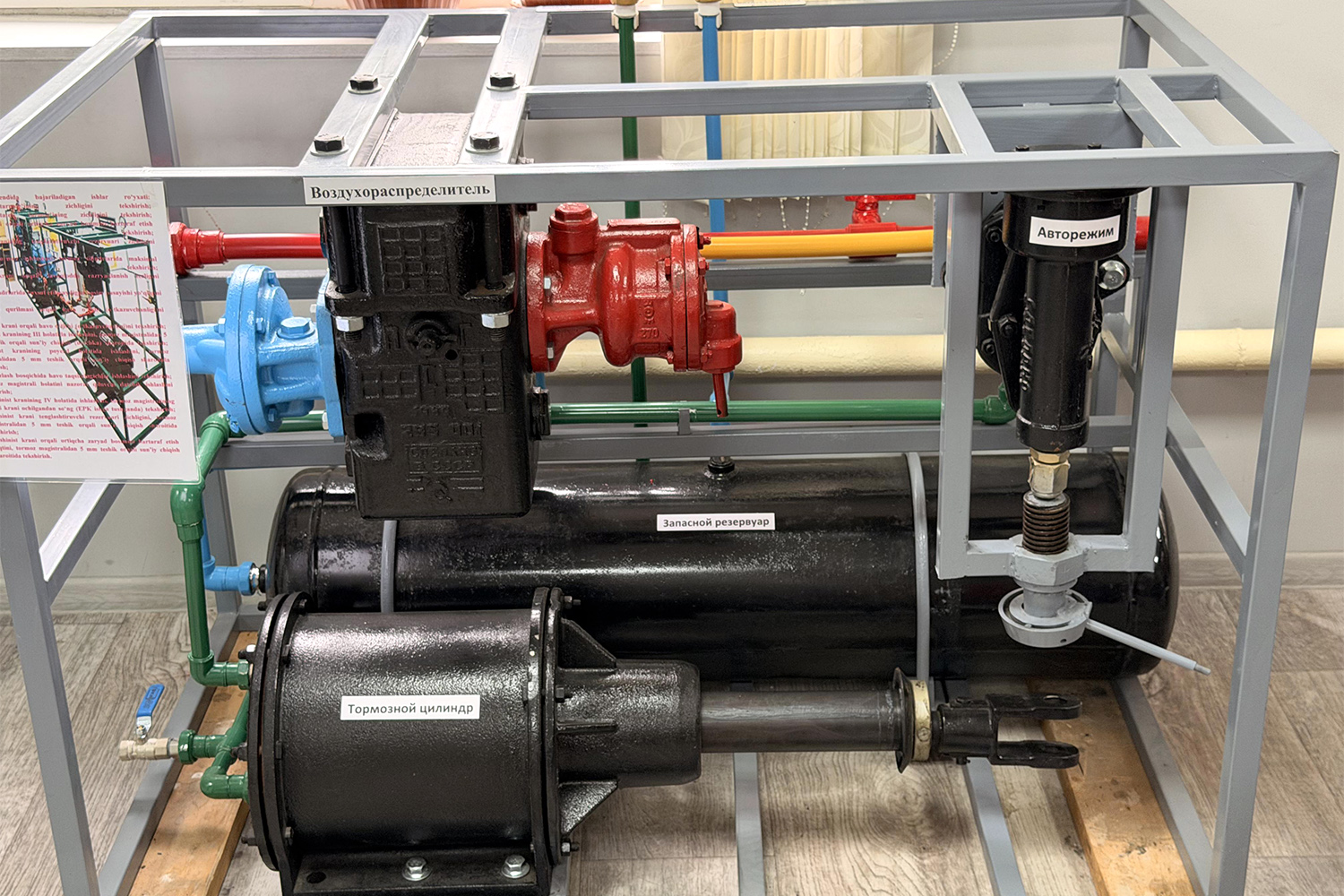
The workstation and frame structure form an ergonomic platform that closely approximates real working conditions. The training simulator installed in the workshop features a sophisticated design and consists of two main modules. The first module has actual brake systems from a TEM18DM diesel locomotive, while the second contains the brake equipment of a freight car. This allows specialists to thoroughly study the operation of rolling stock brake systems in practice.
The simulator is designed for practical training at specialized educational institutions on rolling stock brake equipment maintenance, as well as for the efficient organization of training and demonstration exams.
Developed by the Industrial Rail Transport Department, the simulator fully complies with the requirements of the "Maintenance of Brake Equipment on Railway Rolling Stock and Brake Control" regulations.
The simulator can be used to check the brake equipment of freight and passenger trains, conduct full brake tests, and perform all necessary checks of the driver's brake valve at the specified pressure.
The pneumatic components of the simulator are interconnected by pipelines and operate according to a circuit similar to that of actual freight and passenger trains. This creates a simplified, yet fully functional, model of a real braking system.
The system operates without the "CLUB" safety device, as well as without protection systems against the simultaneous use of electric and pneumatic brakes.
The control panel contains four pressure gauges displaying the pressure in the equalizing reservoir, supply line, brake line, and brake cylinders.
The following practical tasks are performed using the simulator:
- Checking the brake and supply line for leaks;
- Testing the driver's brake valve operating modes;
- Checking the emergency braking speed;
- Monitoring the pressure in the brake cylinders;
- Checking the operation of the air distributors;
- Monitoring the operation of the brake line sensors;
- Checking the braking system's operation in case of an air leak;
- Identifying the interlocks and determining the capacity of air ducts;
- Conducting a full brake test.
This development is essential for reinforcing the theoretical knowledge of the shop workers and future specialists directly on the job in a completely safe environment, enhancing their practical skills, and ensuring safe and efficient work.
